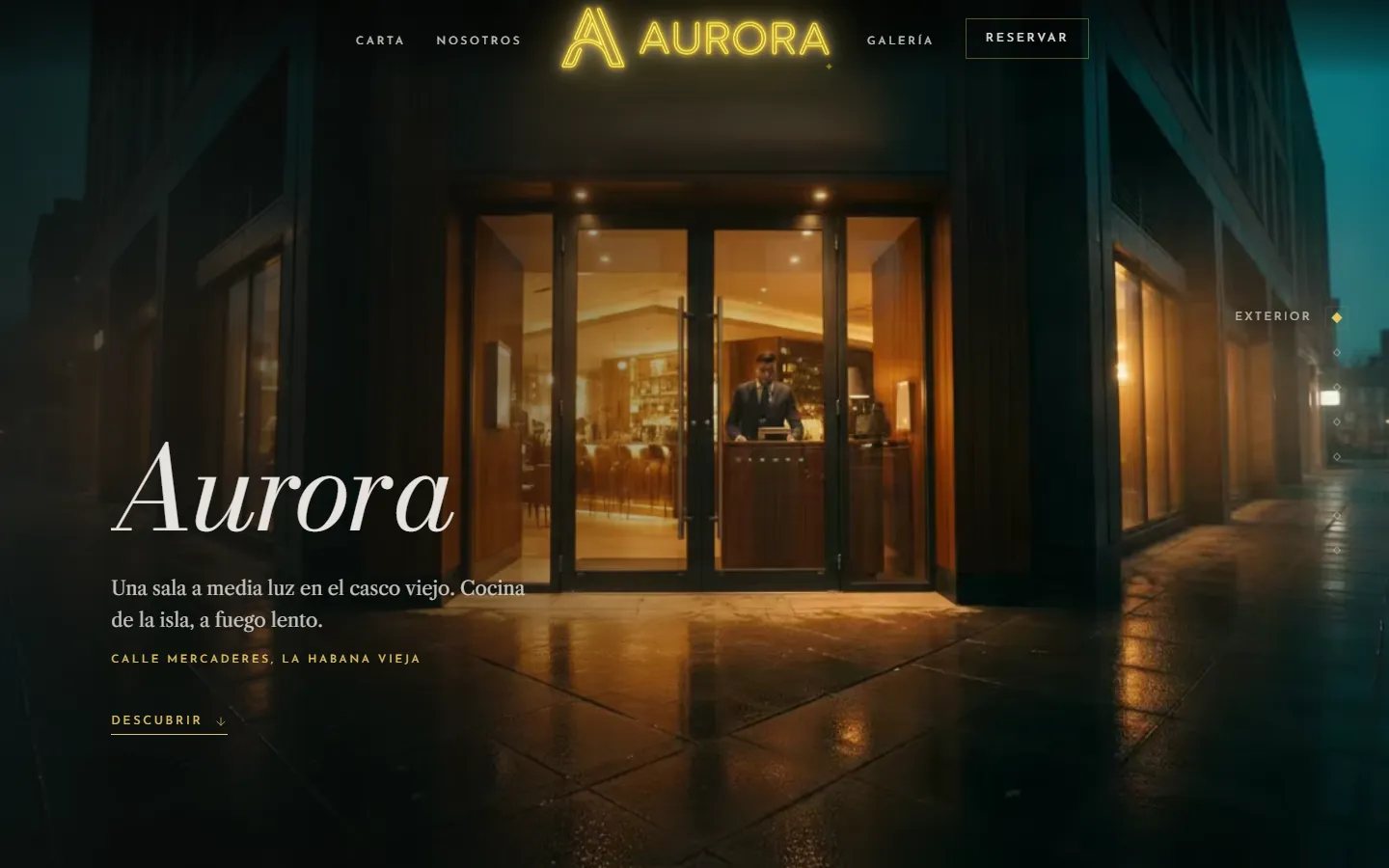
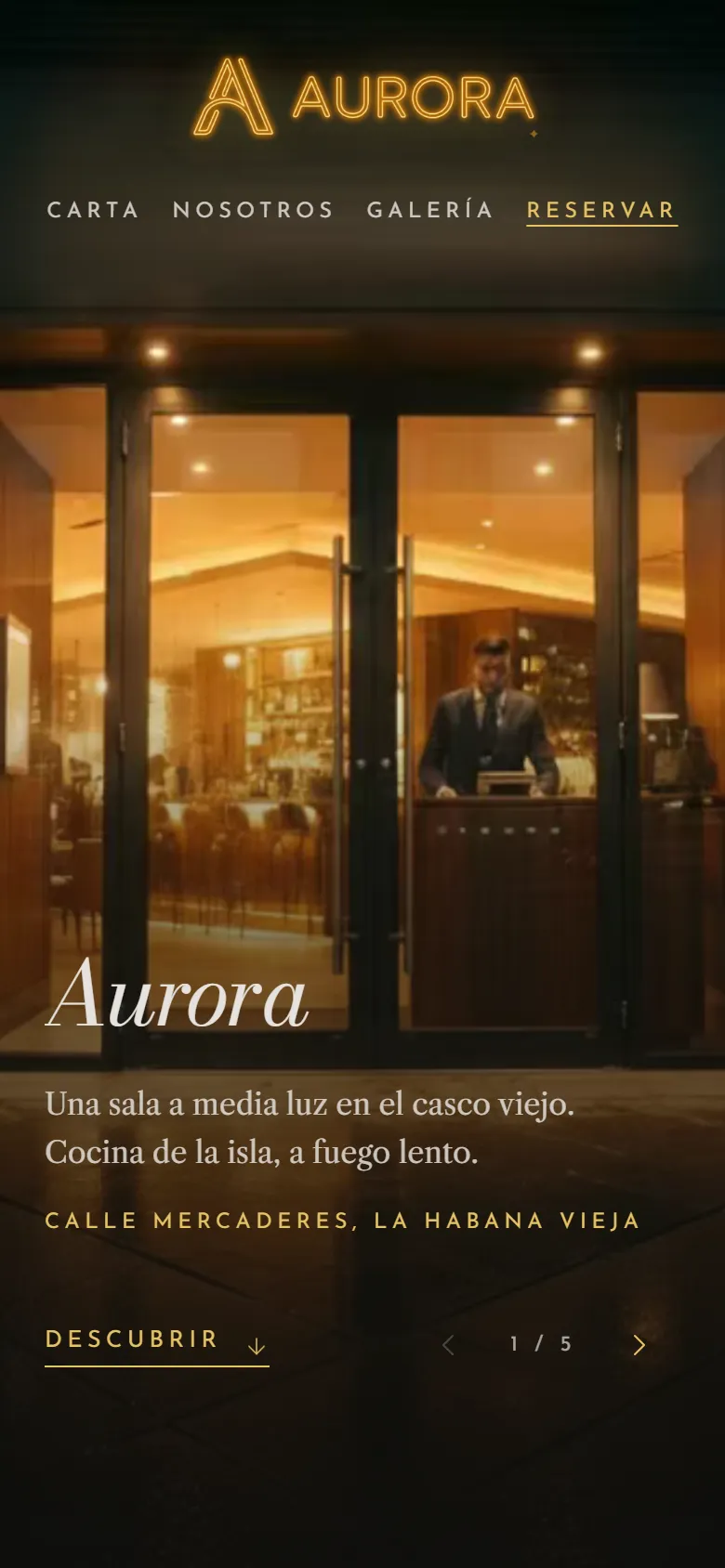
Aurora's homepage: video of the venue, top navigation (Menu, About, Gallery, Book) and a carousel of five scenes with the "Discover" entry.
01
What we set out to do
Aurora is the studio's own demo, not a restaurant commission. It grew out of something we see often: restaurant websites tend to be flat and fail to convey what it feels like to be there. This one had to communicate mood and rhythm without hiding the essential information.
DARVIA handled the whole project: design, development, and launch.
02
The decisions behind the experience
Atmosphere before the menu
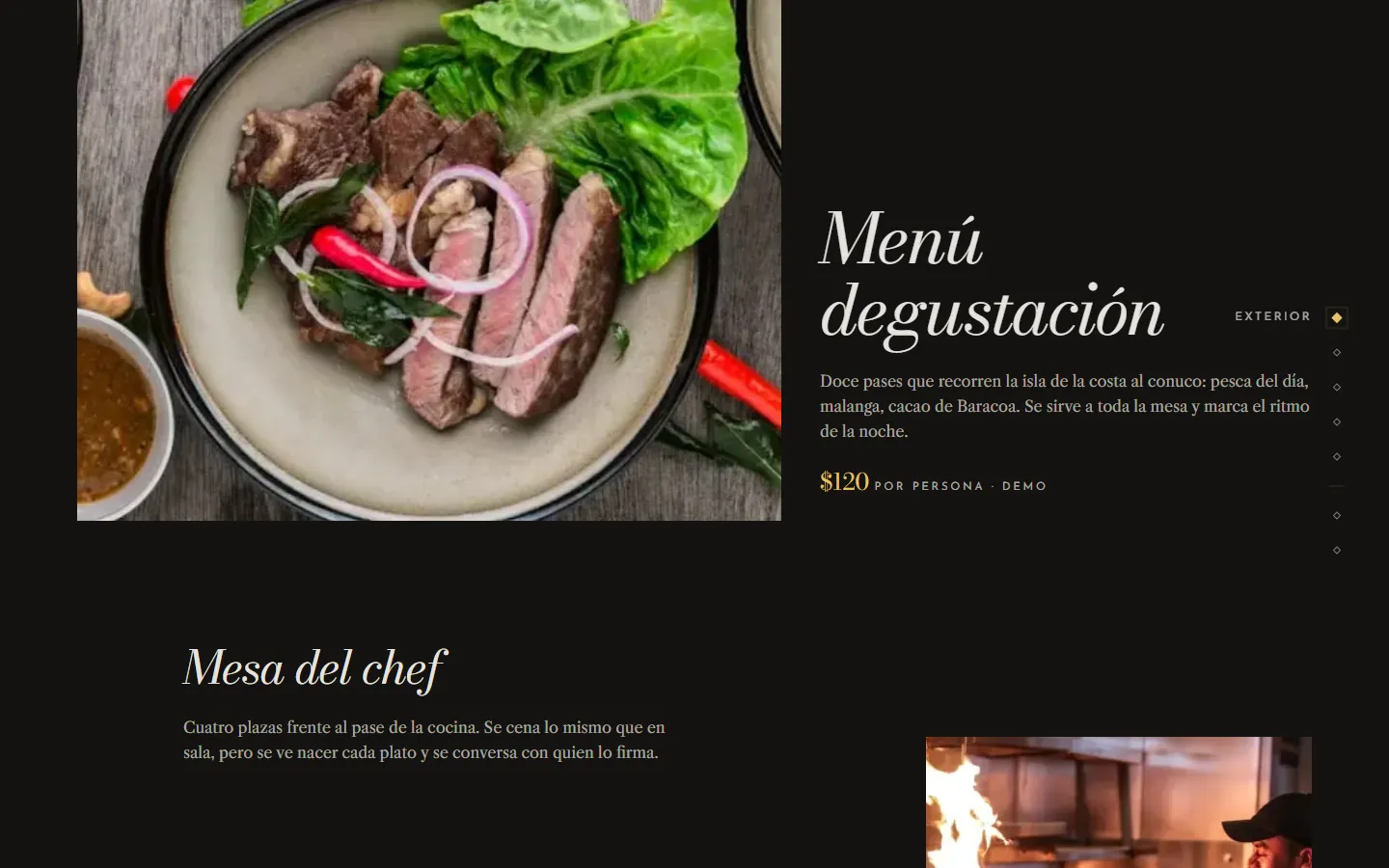
The homepage presents the venue with video, photography, and a journey guided by scroll and a carousel of scenes. The visitor enters the restaurant's atmosphere first and reaches the information afterward: the "Essence" section presents three ways to sit at the table: tasting menu, chef's table and rum and wine pairing.
01 / 02
Storytelling without hiding navigation
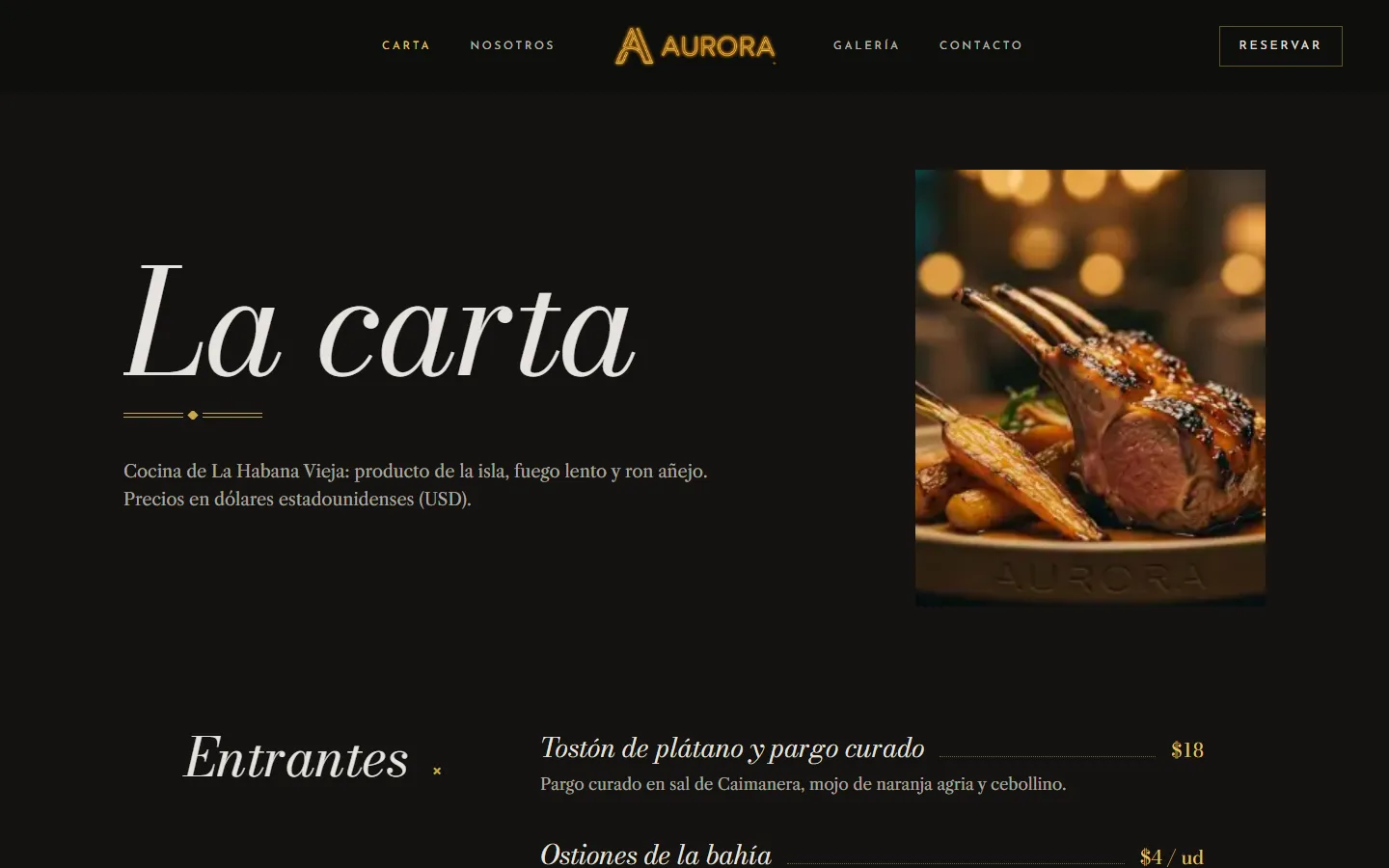
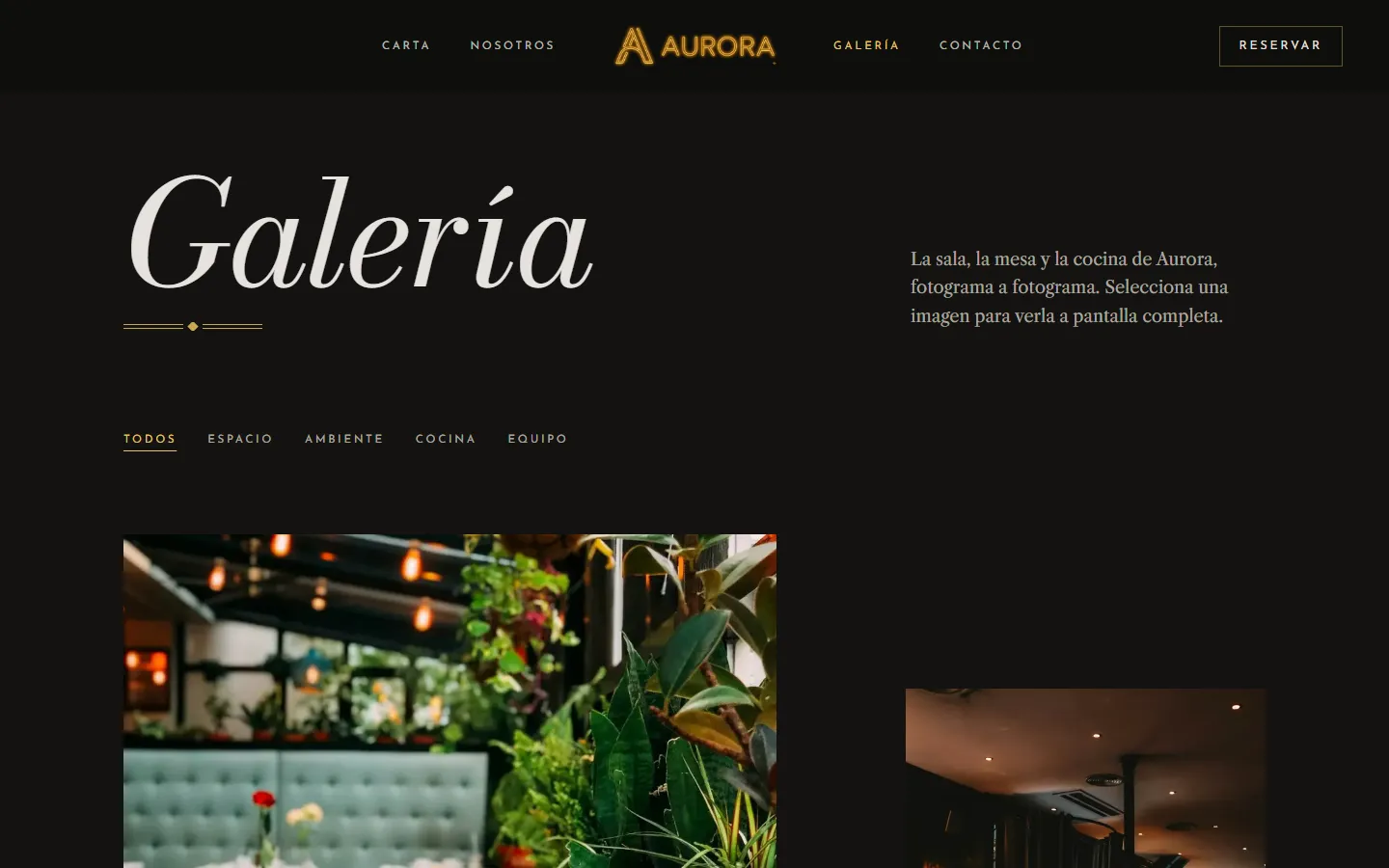
The narrative journey coexists with clear navigation: a top menu always visible, a side diamond index to jump between sections, and dedicated pages for the menu, gallery, team, experiences, and events. The experience never forces a full scroll to reach the essentials.
01 / 02
The same experience on mobile
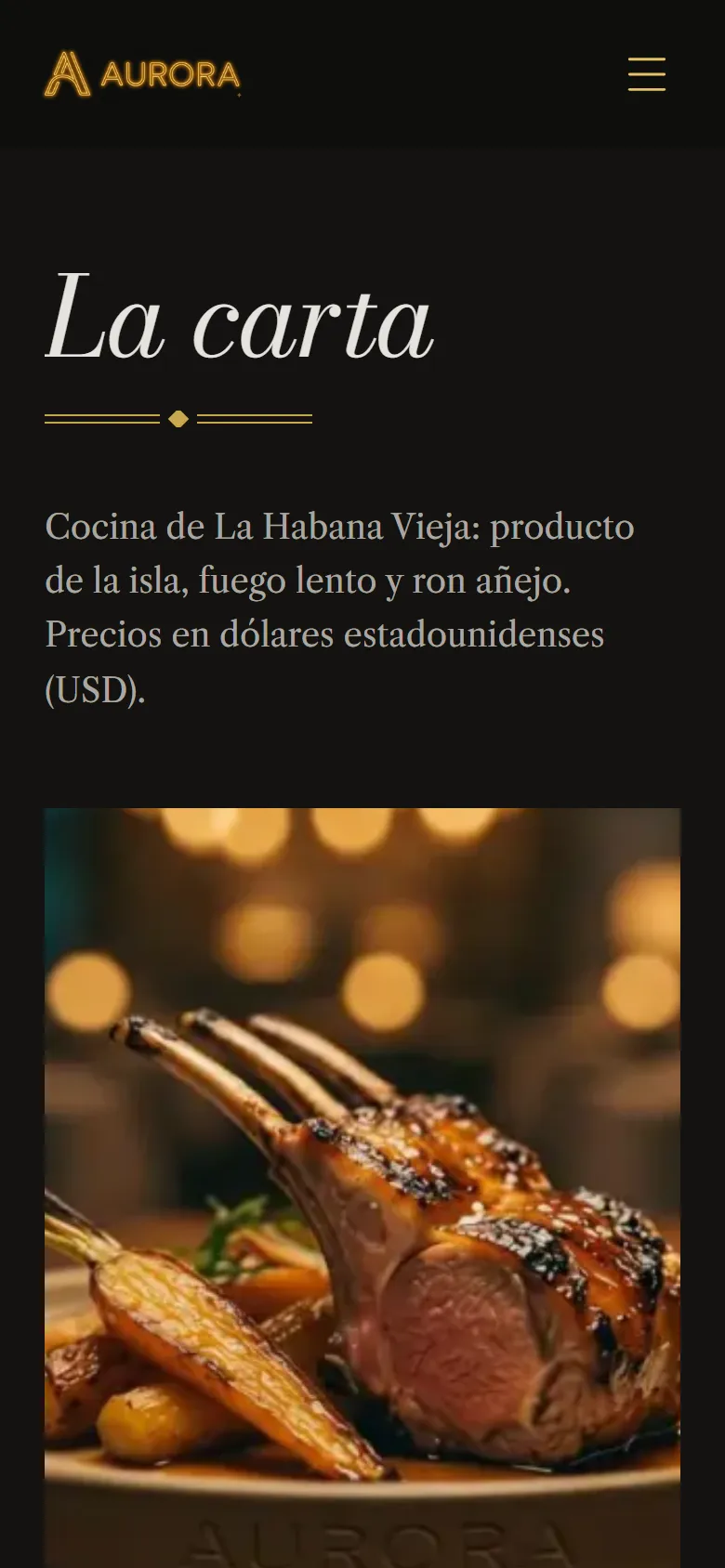
On mobile, the homepage keeps the video, the carousel, and navigation in view; interior pages move to a dropdown menu without losing content.
01 / 02
03
What was built and what it demonstrates
You can check in the demo
the homepage with video and carousel; the "Essence" and "Our experiences" sections; the Menu, About, Gallery (with filters by space, atmosphere, kitchen, and team), Experiences, and Events pages; and an on-screen booking flow with date, time, and party size.
What the demo doesn't do
the booking is interface only. No date, time, or data you enter is sent to any system. The prices, dishes, address, hours, and contact details shown are fictional demo content.
04
The technology behind the project
Aurora is built with Next.js, React, Tailwind CSS, GSAP, and Lenis. The main decision was isolating narrative scroll in client components: this way smooth scrolling and GSAP animations coexist with Next's routing without the rest of the page losing server rendering or its crawlability.